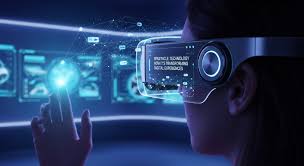
You know that feeling when a piece of tech pops up out of nowhere? One day you’ve never heard of it, and the next, it’s popping up in tech forums and niche news sites. That’s exactly what’s happening right now with something called Spaietacle.
If you’re scratching your head, you’re not alone. The name sounds like a mix between “spectacle” and “space,” which is actually a pretty good hint about what it might be. Let’s cut through the buzz and take a calm, objective look. What is this thing, really? And is it a glimpse of the future, or just another flashy concept?
I’ve been digging through the available details, developer talks, and patent filings to give you a clear picture. Think of this as a friendly guide, not a sales pitch.
Let’s Start with the Name: What Are We Talking About?
First things first. Based on all available information, Spaietacle is a proposed hardware and software platform for augmented reality (AR) glasses. Let’s unpack that jargon.
Imagine ordinary-looking glasses. Now, imagine they have tiny, transparent screens in the lenses. Instead of blocking your view like VR headsets, these screens add digital information onto the real world you’re already seeing. That’s the core idea of AR glasses, and it’s the category Spaietacle is aiming for.
The name seems to be a play on words: a “spectacle” you look at, and a “space” you interact with. It’s not a consumer product you can buy today, but a developing platform that has attracted attention for its stated technical approach.
Peeking Under the Hood: The Reported Tech Specs
So, how would a device like Spaietacle supposedly work? The public information points to a few key ideas. Remember, these are proposed features, not store-ready facts.
-
The Display Magic: The biggest challenge for AR glasses is making a bright, clear image appear on a transparent lens in broad daylight. Public documents suggest Spaietacle is exploring advanced waveguide and micro-LED technology. In simple terms, this is a method to pipe light from a tiny projector at the temple into the lens and directly into your eye. Tech sites like CNET often explain how these optical engines work in their wearable tech coverage.
-
Sensing the World: To overlay digital info correctly, the glasses need to understand their environment. This would likely involve a suite of common AR sensors:
-
Cameras: To map the room and identify objects.
-
Depth Sensors: To understand how far away things are.
-
Inertial Measurement Units (IMUs): Basically, super-smart motion trackers to know when you turn your head.
-
-
The Brainpower: All this data needs processing. The concept involves a powerful, miniaturized chip system—likely a variant of a smartphone processor—handling the real-time graphics and spatial calculations.
If It Works, What Could You Actually Do With It?
This is the fun part. The “why” behind any AR platform. The proposed use cases for a system like Spaietacle fall into a few clear buckets:
-
The Information Overlay: This is the classic AR dream. Walking through a city, you might see floating restaurant reviews. Looking at a complex printer, a repair manual could highlight the exact button to press. It’s like having a context-aware assistant painted onto the world.
-
The Hands-Free Helper: For tasks where your eyes and hands are busy. A mechanic could see torque specifications overlaid on a bolt. A chef could follow a recipe without touching a screen. A scientist in a lab could see data visualizations floating beside their equipment.
-
The New Social & Creative Layer: Imagine leaving a virtual note for a friend on a park bench only they can see, or collaborating on a 3D model that appears to sit on your real table. This social, persistent layer is a major focus for the future of AR, discussed in depth by researchers at places like the University of Washington’s Reality Lab.
The “Yeah, But…” Considerations
No technology exists in a vacuum, and AR glasses have some huge, well-known hurdles. Any objective look at Spaietacle has to address these universal challenges.
-
The Form Factor Problem: Can they make it light, comfortable, and not make you look like a cyborg? Battery life is also a massive hurdle—powering those displays and processors is draining.
-
The Social Acceptance Question: Are people ready to wear cameras on their faces in public? This isn’t just a tech problem; it’s a social one. The conversation around privacy with devices like these is critical and ongoing.
-
The Killer App Dilemma: What is the one application so useful that millions of people need it? We had email for PCs, the web browser for the internet, and ride-sharing for smartphones. AR is still searching for that universal must-have use.
-
The Ecosystem: A device like this is useless without great software. Building a developer platform that attracts creative minds is as important as the hardware itself.
How to Think About Spaietacle Right Now
Here’s the most important takeaway: as of right now, Spaietacle is best understood as a technological proposition and a development platform.
It’s a set of ideas and early-stage engineering aiming to solve the hard problems of AR. It’s more akin to a concept car at an auto show than a sedan at your local dealership. It shows a direction the industry might head in.
If you’re a developer or a deep tech enthusiast, it’s a fascinating project to follow for its technical approaches. If you’re a consumer wondering if you should wait to buy these instead of the latest Ray-Ban Meta smart glasses, the timeline is likely years, not months, for a finished, polished product.
The Final Word: A Step in the Long Journey
So, what is Spaietacle? It’s a candidate in the long race to build the AR glasses of the future. It represents one vision of how to tackle the immense challenges of putting a useful, wearable computer in front of our eyes.
Its value right now isn’t as a product you can buy, but as a signal. It shows that serious work continues behind the scenes to make sleek, powerful AR glasses a reality. It reminds us that the future of computing might not be in our pockets, but right in our line of sight.
The road to getting there is paved with engineering breakthroughs, social conversations about privacy, and a quest for that magical, indispensable app. Spaietacle is one vehicle on that road. Whether it reaches the destination first, or simply helps map the route, is a story still being written.