I keep thinking about how often a single, unfamiliar material can stop a renovation in its tracks. Asbestlint is one of those materials—small, unassuming, and loaded with history.
So what exactly is Asbestlint, and why does it still come up in conversations today?
What is Asbestlint, really?
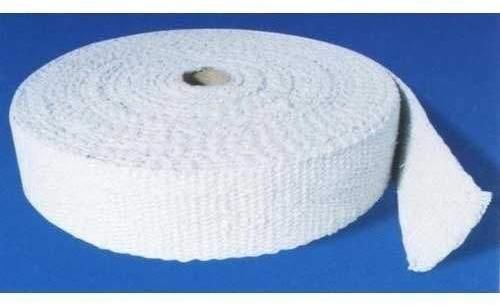
Asbestlint is asbestos tape—traditionally used to seal, insulate, or protect joints, pipes, boilers, and heating systems exposed to high temperatures. It looks deceptively simple: a woven, cloth-like strip, usually white or grey, sometimes brittle with age. Decades ago, it was considered a miracle material. Heat-resistant. Durable. Cheap.
Of course, we now know better.
Asbestos fibers, when disturbed and inhaled, pose serious health risks. Organizations like the World Health Organization have long documented the connection between asbestos exposure and diseases such as mesothelioma and asbestosis (you can explore their guidance via the WHO’s asbestos resources). That knowledge has completely changed how Asbestlint is viewed today.
Still, it hasn’t disappeared—especially in older properties.
Why was Asbestlint so widely used in older buildings?
This reminds me of when I tried to trace the materials used in a 1970s apartment block during a heating upgrade review. Nearly every high-temperature joint had some form of asbestos-based insulation. Back then, Asbestlint solved multiple problems at once:
-
It handled extreme heat without degrading
-
It sealed joints tightly (steam systems loved it)
-
It didn’t burn or melt
From an engineering perspective of the time, it made perfect sense. And because asbestos was heavily promoted across Europe and beyond, Asbestlint became standard in residential, industrial, and even marine settings.
No one was asking the right questions yet.
Where are you most likely to encounter Asbestlint today?
If you’re considering this, here’s what you should know: Asbestlint usually shows up in legacy systems, not new installations. I’ve personally encountered it during inspections of:
-
Old boiler rooms in apartment buildings
-
Basement pipe insulation near heating manifolds
-
Industrial ovens and furnaces built before the 1990s
Sometimes it’s wrapped neatly. Other times it’s fraying, dusty, and clearly past its safe lifespan. That’s when alarms should go off—quietly, but firmly.
And yes, winter maintenance season is when it’s most commonly discovered.
Is Asbestlint dangerous if it’s just sitting there?
Short answer? It depends.
Asbestos materials are most dangerous when disturbed. Intact Asbestlint that hasn’t degraded may not release fibers immediately. But age, vibration, heat cycling, and moisture change that equation over time.
According to workplace safety guidance from OSHA and environmental agencies like the U.S. Environmental Protection Agency, any suspected asbestos-containing material should be treated as hazardous until professionally assessed. Even small disturbances—cutting, sanding, or peeling—can release fibers you’ll never see or smell.
Game changer.
What should you do if you find Asbestlint?
I’ve seen panic set in fast when someone realizes what they’re looking at. Take a breath. The smartest response is also the simplest.
Do not touch it. Do not test it yourself.
Instead:
-
Isolate the area if possible
-
Avoid airflow disturbance
-
Contact a certified asbestos professional
In many regions, laws strictly regulate asbestos handling and removal. The European Agency for Safety and Health at Work and national health authorities are clear: DIY removal is not only dangerous, it’s often illegal.
I once watched a renovation timeline shift by months because someone cut into Asbestlint without knowing what it was. The cleanup cost far more than the original project. A hard lesson.
Are there modern alternatives to Asbestlint?
Thankfully, yes—and they’re far better.
Modern high-temperature sealing tapes use materials like fiberglass, ceramic fiber, and basalt. They’re safer, compliant with current regulations, and easier to source. Compared to old Asbestlint, these alternatives:
-
Offer similar or better heat resistance
-
Don’t pose long-term health risks
-
Are widely approved for residential and industrial use
Many professionals now automatically replace asbestos tape with ceramic fiber tape during upgrades. It’s one of the few times in construction where the modern solution is unquestionably better.
Can Asbestlint still be bought or sold?
This is where things get complicated.
In most countries, new asbestos products are banned. However, Asbestlint may still appear in old inventories, second-hand equipment, or imported machinery. That doesn’t make its use legal.
Regulatory bodies like the European Commission and national environmental agencies maintain strict controls on asbestos-containing materials. Even possession can be restricted depending on jurisdiction.
So if you see it for sale? That’s a red flag worth investigating carefully.
Why does Asbestlint still matter in 2026?
Because buildings last longer than regulations.
Every year, more people renovate homes built during the asbestos era. And every winter, heating systems get opened up, inspected, repaired. That’s when Asbestlint quietly reappears—often unnoticed until it’s already a problem.
What surprised me most during my own research was how many people had seen it without knowing what it was. A tape. A wrap. Nothing alarming. Until it is.
And that’s the real issue.
Final thoughts from someone who’s seen it up close
I didn’t expect a simple strip of tape to carry so much weight when I first started digging into Asbestlint. But the more I learned, the clearer it became: this isn’t about fear, it’s about awareness.
Asbestlint represents a moment in industrial history when performance mattered more than long-term safety. We can’t change that past—but we can respond intelligently today. Respect it. Don’t disturb it. Replace it responsibly.
And if you ever find yourself staring at a frayed, chalky tape around an old pipe, wondering if it’s worth worrying about… it probably is.